After seeing so many friends suffering the effects of either social distancing, or social isolation, not to mention the fear, anxiety and outright panic about the future... the economy, jobs, bills...
Plus, worrying about either getting the virus, or their kids (especially those who are immuno-compromised or have immuno-compromised kids,)...
And having been through my own 'trauma,' fraught with anxiety and panic attacks, and a lot of therapy over the course of my life, plus my 'only child syndrome natural inclination to like spending time enjoying my own company, and working at home for 15 years, . I wanted to help others who were struggling with this 'emotional turmoil,' of dealing with this Covid-19 pandemic.
Managing And Coping With The Emotional Turmoil Of The Corona Virus Pandemic
Start your day off right- with Positive Affirmations To Start Your Day
I've compiled a short list of 'Great Day Starting Positive Affirmations" videos I found on YouTube. I've listed them in order of 'length,' because I realize that we all have different amounts of free time available, so I listed these resources based on the time commitment each one requires, starting with 5 minutes, and ending with 30 minutes.
Choose the one that's best suited to the time you have available or are willing to invest... and put your fears, panic, and anxiety to rest.
Overcoming The Overwhelm Of Anxiety & Depression From Pandemic Survival Overload
As someone who has not only suffered from anxiety and panic attacks, and who's been avoiding places that are just too 'peopley,' for years, I figured that 'social distancing' wouldn't be a problem for me at all. I certainly did not even consider that I would feel anxiety from being alone.
The anxiety and panic attacks I'd experienced some 10-15 years ago were triggered by being 'out' in public, around people. Around too many people. Or sitting in traffic with too many cars on the road.
Yet, after nearly a month of extremely limited 'human connections,' every now and again I've felt the all too 'human,' need for human contact... for 'connection.'
Fortunately, with 45 years as a 'lonely only,' under my belt, a dash of Stockholm Syndrome, a handful of PTSD, then bake at '15 years of working from home,' I'm not just 'immune' to the effects of the social distancing (which many people are confusing with 'social isolation,') I've also got some pretty good coping skills for dealing with the mountain of negative emotional impact this 'pandemic' is unleashing on the world.
Extra coping skills anyone cane use to fight fear and avoid stress, depression, and anxiety...
Eat right, get plenty of exercise and and make sure that you are taking care of you.
Start keeping fresh fruits and vegetables stocked in your fridge, and try to eat 5 small meals each day. instead the large meals.
Exercise isn't just good for your body. It's also good for your mind... for your mental, psychological, and emotional health. Get out and go for a walk. Take a bide ride. If you can find a place to swim, go swimming.
There's never been a better time to start a garden, and the best time to start any exercise regiment is always 'right now.'
And with the kiddos home from school, you're going to be scrambling to keep them fed due to 'boredom eating.'
Getting them involved in gardening with you will make them eager to taste the food they grew, and there are many a lesson to be learned from a 'back yard garden' experience.
And since you won't completely 'cure' the 'boredom eating,' getting them up, and out and moving is a requirement, not an option, to satiate their boredom.
Start plan m out some things you'd like to do with your time, and then, start doing it.
This post is part of the " Prepping for Pandemic, The Covid-19 "Coronavirus" Series."
If you're worried that you're 'too late,' or that you didn't start early enough, don't fret, because in this post, we'll also cover 20 foods that you can grow that will provide you with food in as little as 2 weeks.
If the Covid-19 "Coronavirus" Pandemic has showed all of us, it's that the shelves in the stores can remain empty for long periods of time.
It's not too late to start planning and planting your 'survival food garden.'
And with 'virtual schooling,' and the 'Stay at Home' guidelines that have been issued in 34 states as of the date of this post, starting a home food gardening project can help to alleviate boredom for parents and children alike, and in some cases, can also be applied to 'school work,' assignments in subjects ranging from math to physical science. How To Start Your Very Own Food Garden
Creating your very own food garden isn't as difficult as many people think it is. In fact, it can actually be pretty simple. It really just comes down to what resources you have available and what kind of a lifestyle you live.
Start
With Foods That You Can Grow, Harvest, and Eat Quickly...
You may be thinking that it's too late to start growing your own food now, but luckily, it's not. Below is a list of vegetables that you can grow in anywhere, in 3 months or less. Including 4 foods that grow in less than one month, two of them in 14 days or less, and two more in just 2 weeks time. There are many foods you can grow quickly and easily. And there are also quite a few foods that you can grow inside as well as outside. Below is a list of 18 foods you can grow and eat quickly, and easily.
While there are some fruit trees that will produce fruit in their first year, such as the peach tree and the papaya tree, a year is still quite a long time to wait for fruit. Three fruits that you can also grow quickly are cantaloupe, watermelon, and honeydew.
Cantaloupe normally take 90 days to grow from seed to ripen.
Watermelon grow from seed to a 10lb fruit in 65-90 days.
Honeydew take between 45 and 60 days to bear fruit.
Each of these three delicious fruits can be grown, harvested and eaten in no more than 120 days, or 4 months. All three fruits are vines, and in a traditional garden, would require a 4 sq ft per plant to allow for the 'sprawl,' of the vines. Thanks to 'trellis gardening,' you can reduce the amount of space needed for these (and other viny plants like summer squash, zucchini, pumpkin, and cucumbers) foods down to as little as 1 square foot per plant. You can also grow blackberries that you can eat in the first year. Now that you've got a comprehensive overview of what to do to get your own food garden started, start planting...
This post is part of the " Prepping for Pandemic, The Covid-19 "Coronavirus" Series."
Did you like this post? Do you have any questions, or helpful stuff to share? Post your thoughts in the comments below.
Disclaimer: This post is intended for people who are healthy and able-bodied. It is NOT medical advice nor is it intended to be taken as such. If you are sick, please seek professional medical attention immediately.
If there's one thing we've all heard about any illness, it's this: "Stay hydrated."
In this article, we're going to go over:
Why you need water preps
Ways to collect water
Ways to desalinate water
Ways to distill water
Plus, we'll also go over what to do if you live in an apartment or any other place where you may not be allowed to collect rain water. ...Even if you don't have or can't afford fancy equipment... Why Do You Need Water Preps?
So here we are... March 25, 2020 and there are places in the US where local city and county governments are still discussing whether or not to issue 'stay at home,' or 'shelter in place' orders.
A friend of mine who lives on a boat in Ireland commented on Facebook the other day about people getting their yachts ready, even though there is no safe place to go. PSA- The phrase 'Global Pandemic,' is redundant. Pandemic means 'global.' And while it's true that there is no safe place to go when the virus is 'global,' the trouble with this 'novel' virus is twofold- one it's a 'novel' virus, meaning humans have never been exposed to it before and therefore have no natural immunity to it, and two, and probably even more devastating, is that it's one of the most highly contagious viruses that the world has ever seen. Now while 'communicability' is one reason to brave the open seas, it's also the reason that if people won't stay the Hell home without being forced to, they're going to cause martial law to happen... and if that happens, your needs for water and food are going to be entirely dependent on the National Guard providing these things for you.
Let me repeat that for those of you in the back of the room:
"If you won't stay the Hell home of your own free will, you will force the powers that be to force martial law on us all. Because that is the reality of the Covid-19 Virus Pandemic, Coronavirus."
And just in case you haven't seen the hundreds of movies that have depict any kind of 'apocalypse,' be it from war, pandemic, or even aliens, getting food and water could very well be the least of your problems if martial law is declared and the Constitution is suspended. I'm not saying that the United States government will nuke an entire town to stop the spread of the disease or that the National Guard will simply go door to door and test and shoot anyone who's infected, (or just happens to be in a town with infection) but I consider prepping for it to be much like carrying some condoms and a gun - 'it's better to have it and not need it, than need it and not have it.'
Just as none of these things may happen, just as the grid may not go down... if they do, with this info, you'll be as prepared as I can make you based on the knowledge I've gained in my 9 years of prepping. So, that said, if you don't have or can't get a boat to gain access to the last vestige of freedom, the open sea, then it's time to consider how you can harvest and store water and how to distill it so it's safe for drinking. In any event, whether we find ourselves under martial law, or if the grid should go down (yes, most places will require some form of 'power' to a pump that brings water up from a well to your home,) not having to venture out to get water will keep you safe from soldiers telling you that you can't leave your home when you need water. Likewise, if any 'door to door' anything should happen, hiding is easier if you know you can come out once they're gone and still have water. (We'll cover food in another post.) Alright now, let's get started on water collection, storage and systems for making water safe to drink:
Assessment- How Easily Can You Get Water
First thing I want to talk about is climate I happen to live in a sub-tropical climate. That means it rains here. A lot. I'm in Florida and it rains here almost every day in the summer time. I'm also surrounded by water on 3 sides (salt water), and I have lakes and rivers - many of which are spring fed,- and pools all around me. So collecting rain water is easy enough for me.
Now, I don't know much about the desert, so if you live in one of those, the best I can do for you in this post is to give you 'collection' ideas, tell you to fill them up now, and then refer you to some other survival sites where you might get more information on how to get water in the desert. Just being able to 'collect' or 'harvest' rain water or water from lakes or ponds or rivers, etc is only the first step. Even in my sub-tropical climate, where it rains every day in the summer time, I still need 'containers' to collect that water, as even here, we have 'droughts.'
Make Any Water Drinkable, Instantly, with, The Life Straw
Water, water everywhere... and none is safe to drink...
If you happen to live near any body of water, whether it's a spring or a nasty slimy swamp, or even if you do have to harvest water but need it before any kind of purification process can be completed, the 'Life Straw' is one device that every prepper should have in their supply kit and bug out bag. Now I've seen these in the camping section at Wal Mart, however, if your WalMart doesn't carry them, they are available on Amazon.
Award-winning LifeStraw water filter is a must-carry tool for hiking, camping, travel, and emergencies; no disaster kit is complete without it
Filters up to 1,000 gallons (4,000 liters) of contaminated water without iodine, chlorine, or other chemicals; does not require batteries and has no moving parts.
Removes minimum 99.9999% of waterborne bacteria, 99.9% of waterborne protozoan parasites, and filters to 0.2 microns; surpasses EPA filter standards.
An alternative to iodine tablets and bulky purifiers, it weighs 2oz for ultralight portability, and has a high flow rate for drinking from the source.
Comes in a sealed bag, perfect for storing in a bugout bag or other prepper gear supply kit; measures 9 x 1 x 1 inches.BPA Free materials
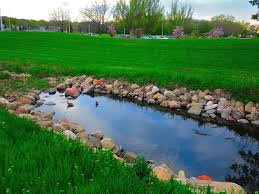
If you live on any kind of 'large' piece of land, obviously a retention pond is one possible way to
collect rain water. However, stagnant water will bring mosquitoes and not only are they a 'nuisance,' they also bring their own set of diseases. Not to mention that in some areas, this could even be a violation of local code enforcement ordinances.
My best guess is that if you have land and have had it for a while, you've already considered this option and for whatever reason haven't done it. Or you have but don't know how to purify it for drinking. Maybe you did it for irrigation, or maybe you didn't do it for one reason or another, such as code enforcement regulations in your area. If you do have one, then the Life Straw can purify that water for you
Cisterns Cisterns are another option, and I've actually even seen one in a back yard in suburbia on a 7,000 square foot lot. This is one project I would definitely love to do one day, and if you don't have a water collection and purification system set up yet, I'd suggest starting with something that you can get set up quickly... as in, before the SHTF. If you're curious however, or if you've got water covered and the 'stay at home,' advice has you bored and you want to try a new project, here's a cool YouTube video depicting the construction of a back yard cistern.
Rain Barrel
I'm sure you've seen or you know what 'rain barrels' are. The most common ones are blue, 55 gallon plastic barrels that you can sit right under one or more of your rain gutters so you can collect the most water from your rainfall. The image on the left is probably the most common and most recognizable rain barrel rain water collection systems. The blue, 55 gallon, plastic drums can be found just about anywhere. No rain barrels are 'cheap' to buy, with the lowest price I've seen on Amazon being about $75.00. I've found several free on Craigslist, but I've also been collecting them (and other stuff from the CL 'Free' section) for years. When not available in the Free section, try the 'Farm and Garden' section. But, if you don't have the time and you do have the funds, I'll show you some other options in this article as well. Before we take a look at the various types of rain barrels and their respective set-ups, there are a fewethings you should probably know about collecting rain water via the gutters on your home. Prepping for preps- things to know before you start collecting rain water... Here's an excellent article from the "Homesteadsurvivalsite.com' on "Mistakes To Avoid When Harvesting Rain Water." When I first started collecting rain water it was for irrigating my garden, so while I made several of these mistakes myself, it wasn't as big of a deal as it is now that I'm prepping for 'drinkable' water. Make sure to read the article before setting up your system.
While the Life Straw, as well as the purification/distillation systems we're going to talk about in this article can offset a good amount of the problems that you may run into if you just tried to set out a bucket to collect rain water and then drink it, the goal of any 'survival' preparation or system should be 'sustainability first.' As Life Straws have a 'shelf life,' and purification and distillation processes, just like desalination processes, take time, taking these few extra steps prior to starting to collect your rain water can provide you with a more sustainable solution than some other solutions offer.
Rain water collection systems are, for the most part, fairly simple systems. You set up a 'container' to collect water when it rains, and you get water. I've set up 5 gallon pails that were just out in the yard, and I've set them up under my gutters too. I've also set up the blue, 55 gallon barrels directly under the gutters. And so far, I've got one under a gutter in my front yard, and one under a gutter in my back yard. Mine aren't raised off the ground and I don't have any 'bank of barrels' that have piping from one barrel to another to collect large amounts. I don't have any hoses or pumps attached to either of them either, though aquarium pumps are cheap at Wal Mart and the plumbing supplies needed to create a 'bank' are fairly inexpensive at Wal Mart, Home Depot, or on Amazon.
Personally, I like shopping on Amazon, because I can make a list, get everything I need and get it delivered. No walking through Wal Mart getting side tracked by all the other bright shiny objects, and no 'mansplaining' from the chauvinistic Y Chromosome holding employees at Home Depot...
So my set up will evolve. Eventually. As will yours. Especially if things like time, money, skills and knowledge are barriers for you. Which brings me to my first piece of advice when it comes to setting up a rain water collection system.
"Work with what you've got, evolve as you can."
If all you've got to work with right now is a 5 gallon jug, then set it up under a gutter. If you can afford a round plastic kiddie pool from Wal Mart, buy it. Caveat: Use black garbage bags to make a cover to a.) keep it from turning green b.) keep it from becoming a mosquito egg laying haven and c.) to have it double as a source of 'solar heated hot water, for bathing, washing clothes and washing dishes,' to keep your electric bills down.
Now, if your funds allow you to buy one or more rain barrels, here are a few styles you can choose from. Starting with the least expensive option...
The Good Ideas RW40-KHA 40 gallon Rain Wizard Rain Barrel Now this one is definitely one that I like a lot.
It can also be easily integrated into a 'bank' of barrels with simple hoses. Although, with hoses, you will most likely need to manually open the spigots as one barrel fills and you need to fill the next one.
The Good Ideas RW-ASPEN50-OAK Wizard Aspen, Large 50 Gallon Saver-Oak Rain Barrel
If you're willing to forego the aesthetics for more 'storage' the Good Ideas RW-ASPEN50-OAK Wizard Aspen, Large 50 Gallon Saver-Oak Rain Barrel is a very comparable option to the more decorative ' RW 40-KHA Rain Wizard above.' Like the previous barrel, it comes fitted with a spigot, saving you both the expense of purchasing not only the spigot but also the plumbers cement needed to seal the hole the spigot is placed in, but also the time of having to drill the hole and install the spigot as well. For barely $1.00 more, the Good Ideas RW-ASPEN50-OAK Wizard Aspen, Large 50 Gallon Saver-Oak Rain Barrel offers an extra 10 gallons of water storage and can also be purchased on Amazon.
The Good Ideas IMP-N50-DBR Impressions Nantucket Rain Saver Rain Barrel, 50 Gallon, in Dark Brown
If your budget allows another $50.00 per water containment unit, the IMP- N50-DBR Nantucket Rain Saver Barrel offers a lot more than than the previously mentioned Good Ideas Rain Barrels. Featuring two spigots, this rain barrel offers the options of not only even easier 'rain barrel bank systems,' it also allows you more options for which you can assign various water tasks, as each can feed into another barrel, while also allow you to attach hoses to the second spigot for various water needs. These dual spigots allow you to assign each barrel to different 'tasks,' such as irrigation for your garden, a solar heated hot water source for your home, or even, an outdoor shower if that's on your list of 'back yard fantasies.' And while the second spigot is a very convenient feature, the Nantucket Rain Saver Barrel also has a top that serves as a 'planter,' allowing your rain barrel to do double duty, saving rain water and growing crops of food, or flowers. The Good Ideas IMP-N50-DBR Impresssions 50 gallon Nantucket Rain Saver Rain Barrel in Dark Brown, is available on Amazon. The Good Ideas Rain Barrels are only a small fraction of the rain barrels available on Amazon. You can always search Amazon yourself and see what you find that strikes your fancy. For now we still have a lot more territory to cover in this post, so I'm going to briefly touch on a couple of simple collection systems you can set up, and then we're going to move on to how to desalinate and distill water.
Water Collection Systems Using Multiple Water Collection Containers....
I'm just going to post a couple of YouTube videos so you can get an idea of some of the ways people have chosen to set up their own water collection systems. The plumbing is pretty much the same for all of them, so really, making a decision is going to come down to your own personal resources in terms of time, money, and space.
Rainwater Harvesting | Collect & Store The Cleanest Rain Water From Your Roof
Rain Harvesting the Right Way - Prepper's Must See
Building a Rain Barrel - Easy as 1, 2, 3
Now that you've seen a few rain water collection system set ups, let's talk about 'purification.'
Water Purification Processes
Aside from the Life Straw mentioned at the beginning of this post, there are two other ways that are useful for turning water into drinking water.
We're going to examine one simple process that will turn either salt water, or any other kind of water, into drinkable H20, and best of all, this process can be done using no energy by using the power of the sun and 'evaporation.'
How to Desalinate Water on a Desert Island
Don't let the title to this video fool you. You don't have to be stranded on some deserted isle to make this work and the process uses supplies you can get for free, usually from your own home.
\
If you want to speed up the process, check out this video... How To Turn Salt Water Into Fresh Water (Simple Improvised Distillation)
And if you want speed, without fire, check out this video...
DIY Solar Desalinator/Distiller (Turn Salt Water Into FRESH WATER!


 Exercise isn't just good for your body. It's also good for your mind... for your mental, psychological, and emotional health. Get out and go for a walk. Take a bide ride. If you can find a place to swim, go swimming.